For the eleven years I spent in newsrooms, my desk was a graveyard of abandoned coffee cups and deadline-induced adrenaline. I lived in a state of high-functioning, low-grade anxiety that felt like a radio playing static in the next room—never loud enough to stop me from working, but constant enough to make me feel perpetually drained.
When you spend over a decade editing personal essays and mental health copy, you start to spot the patterns. https://highstylife.com/are-boundaries-a-form-of-self-care-or-just-avoidance/ You see the same "miracle cure" headlines—the morning routines that will change your life, the miracle diets, the five-minute habits that supposedly banish panic. As an introvert living with a baseline hum of anxiety, I’ve learned that most of these suggestions aren't just useless; they’re exhausting.
If you are looking for a silver bullet, you won’t find it here. If you are looking for a way to build a life that doesn’t feel like a constant battle against your own nervous system, then let’s look at what actually works. Let’s talk about sustainable, grounded, and realistic self-help options, starting with the guidance provided by reputable organizations like the Mind charity.
What Does Mind Say About Lifestyle Changes?
If you have been scouring the internet for anxiety support UK resources, you have likely landed on the Mind charity website. Their approach is refreshingly devoid of the "manifest your way to health" nonsense that clutters the internet.
Mind doesn’t promise that a brisk walk will "cure" your generalized anxiety disorder. Instead, they position lifestyle changes as foundational work. They emphasize that while medical interventions are sometimes necessary, there are practical, physical things we can do to lower our baseline stress. Their guidelines generally focus on:
- Physical Health: Not "getting fit," but simply moving enough to help the body process adrenaline. Dietary Awareness: Understanding how caffeine, sugar, and alcohol act as fuel for an already agitated nervous system. Sleep Hygiene: Prioritizing rest not as a reward, but as a maintenance requirement. Social Connection: Recognizing that, for introverts, "social connection" doesn't mean crowded parties; it means being around people who don't drain your battery.
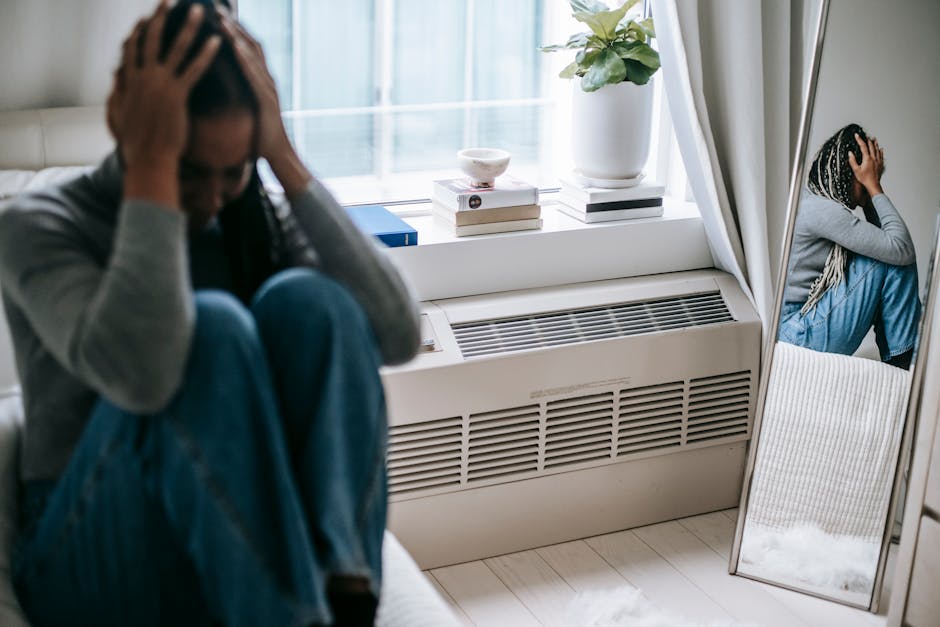
The key takeaway from the Mind charity perspective is that these aren't just "lifestyle tweaks"—they are environmental and biological adjustments that give your nervous system more room to breathe. When you feel that familiar, low-grade background anxiety, it is often a sign of emotional exhaustion. Trying to "hustle" through that exhaustion is usually what exacerbates it.

Image credit: The Yuri Arcurs Collection on Freepik.
Moving Away From the "Quick Fix" Trap
We are culturally obsessed with the "quick fix." If you are feeling anxious, society tells you to buy a journal, download a meditation app, or start a high-intensity interval training program. But when you are already emotionally exhausted, adding "do more stuff" to your to-do list is counter-intuitive.

I stopped falling for the quick fix when I started asking myself one question: "What would feel sustainable on a bad week?"
This is the litmus test for any lifestyle change. If your new routine requires high energy, perfect concentration, and a stable mood to accomplish, it is not a sustainable lifestyle change. It is a performance. Real change happens in the mundane. It happens in the things you can still manage when you have a migraine, a crushing deadline, or a day where the background anxiety is louder than usual.
The Quick Fix Mentality The Sustainable Reality Starting a 30-day "perfect morning" routine. Setting out your clothes the night before to save brainpower. Cutting out all caffeine immediately. Switching to half-caff or herbal tea by 2:00 PM. Trying to meditate for 30 minutes daily. Taking three deep, intentional breaths when you reach a doorway.Environment Design: Reducing Overstimulation
For those of us who are introverted and anxious, the world is fundamentally overstimulating. Constant notifications, open-plan offices, bright fluorescent lights—it all contributes to that "static" feeling.
Environment design is one of the most underrated self help options available. It isn’t about being "minimalist"; it is about sensory management. When I am feeling my anxiety creep up, I audit my space. I ask myself: What here is asking for my attention that doesn't need to be?
Practical Steps for Sensory Management:
Digital Boundaries: Turn off all non-human notifications. If it’s an app, it doesn't need to ping you. If it's a person, you can decide when to engage. Lighting: Swap harsh overhead lights for warm lamps. It sounds small, but it forces your nervous system to down-regulate. Soundscapes: If you work in a noisy environment, use noise-canceling headphones to play brown noise or instrumental music rather than lyrical tracks, which require linguistic processing.Managing Persistent Anxiety: The Role of Medical Support
Sometimes, despite our best efforts with diet, routine, and environment, daily rhythm the anxiety remains persistent and disruptive. This is where we need to be honest about the limitations of "lifestyle" changes. If your anxiety is keeping you from living your life, lifestyle shifts are not a substitute for professional medical guidance.
In the UK, there are various avenues for support. For some, after exploring traditional routes, there has been an increasing conversation around medical cannabis as an option for treatment-resistant anxiety. Companies like Releaf (releaf.co.uk) provide comprehensive information for patients looking to navigate the legal and clinical landscape of medical cannabis in the UK. They offer a structured approach to care, which is crucial—unlike the "quick fix" supplements you find in health food stores, medical cannabis treatments are handled under clinical supervision. It is a reminder that managing health is about working with experts, not experimenting on yourself.
The Importance of a Sustainable Rhythm
The biggest mistake I made in my twenties was trying to be "productive" every single day. I viewed my bad days as failures. As I’ve gotten older, I’ve realized that a "bad week" is just a part of the rhythm.
Anxiety thrives on unpredictability. When we create a sustainable rhythm—a set of habits that are low-effort and consistent—we provide our brains with a safety net. You don’t need a complex schedule. You need a predictable cadence.
Here are a few "tiny tweaks" I’ve kept on my list over the years that help maintain that rhythm:
- The "Transition" Ritual: When I finish work, I physically close my laptop and put it in a drawer. I then change my shirt. It signals to my brain that the "work persona" is offline. The Pre-Bed Buffer: No screens for 30 minutes before bed. I read fiction—nothing educational, nothing related to self-improvement. Just fiction. The "Safe" List: On a bad week, I have three meals I know I can cook without thinking. I don't try new recipes when my baseline anxiety is high.
Avoiding the "Avoidance" Label
One of the things that annoys me most about modern mental health discourse is the tendency to call every boundary "avoidance."
If you don't go to a party because it will leave you socially hungover for three days, you aren't "avoiding life." You are practicing self-preservation. You are managing your battery. Mind charities and other grounded organizations often emphasize that understanding your triggers isn't about hiding; it’s about choosing where to spend your limited emotional energy.
Do not let anyone tell you that protecting your peace is a weakness. As an introvert, your nervous system is simply wired to take in more data than the average person. Managing that data intake isn't avoidance—it’s smart environmental design.
Final Thoughts: Start Small, Stay Honest
If you take nothing else away from this, let it be this: you do not need to overhaul your entire life to feel better. In fact, doing so will likely make your anxiety worse.
Start with one tiny, sustainable change. Maybe it’s turning off those notifications. Maybe it’s buying a soft lamp for your desk. Maybe it’s simply reaching out to an organization like Mind charity to look at their anxiety support UK resources to see if there’s a local peer group that feels right for you.
Cut the sales pitches. Ignore the people telling you to manifest "good vibes." Focus on your nervous system, protect your environment, and always—always—ask yourself if what you are doing is sustainable for the days when you are tired, overwhelmed, and just trying to get through to the weekend. That is where real health begins.